Why the flour matters more than the recipe
A sourdough starter is not a recipe. It is a living culture of wild yeast and lactic acid bacteria that you are trying to grow, in your kitchen, from microbes already present on grain and in the air. Most starter failures in the first week are not about temperature or feeding schedule. They are about food. The flour you choose determines how many of the right microbes show up to begin with.
Refined white flour has had its bran and germ removed. The bran is where most of the wild yeast and bacteria live. If you start a culture with all-purpose flour, you are essentially asking microbes to colonize a relatively sterile substrate while competing with anything that drifts in from the air. It works, eventually. It is just slower and more prone to going sideways.
Whole-grain flours still have the bran. They come pre-populated with the microbes you want. That is the entire game.
Starting from scratch: rye is the answer
For day one of a brand-new starter, our pick is whole-grain rye. This is not universal advice and it is worth knowing where the disagreement sits: King Arthur builds its standard starter on unbleached all-purpose and gets there fine, while rye-first is the faster route and the one most troubleshooting guides fall back on when an all-purpose build stalls. The reason rye works is biological. It carries a higher load of wild yeast and lactobacilli on the bran than wheat does, and it ferments faster.
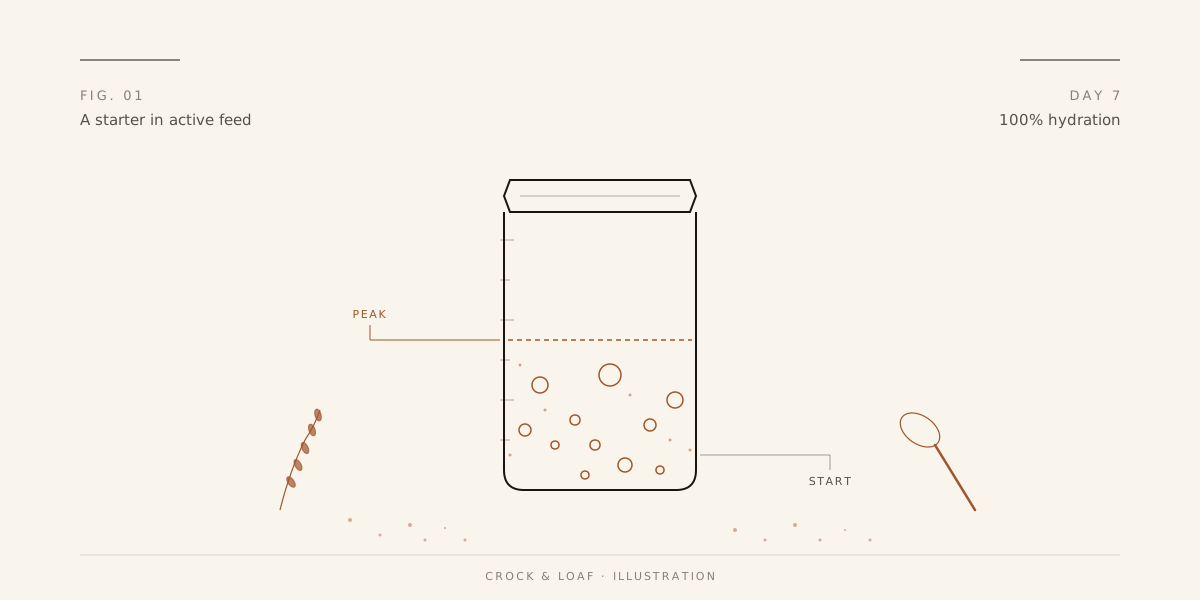
In practical terms, a rye-fed starter will usually show visible activity (bubbling, mild expansion) within 2-3 days. The same starter built on white all-purpose flour might take 5-7 days before anything visible happens — long enough for many beginners to assume something is wrong and throw it out.
The pattern that fails: beginner uses all-purpose flour, sees nothing for four days, panics, dumps it and starts over. The starter was probably fine. It just hadn't built enough population yet. Rye shortcuts past most of this anxiety.
You do not need much. A standard starter build calls for around 50g of flour per feeding for the first week — about a third of a cup. A 1kg (2.2 lb) bag of rye is more than enough to get a starter fully mature with leftover for backup builds.
Why not 100% rye forever?
You can keep a starter on 100% rye indefinitely. Many professional bakers do. Rye starters are vigorous, sour, and produce excellent flavor in the bread.
The reason most home bakers switch off rye after the initial build is cost and availability. Whole-grain rye is harder to find and more expensive per pound than bread flour or all-purpose. If you bake once a week and your starter eats 50g per feeding, you are looking at maybe 200g of flour per week just on starter maintenance. Rye at $4-6 per pound versus all-purpose at $1-2 adds up over months.
If you can't get rye: whole wheat, then everything else
Whole-grain rye is best, but it is not always easy to find. In most American supermarkets you will find it on the King Arthur or Bob's Red Mill shelf if you find it at all. In a pinch, here is the order of substitutes:
- Whole wheat flour: readily available, works almost as well as rye. Slightly slower to wake up. Hard red wheat is best; white whole wheat works too but is a touch slower.
- Spelt flour (whole grain): works well if you can find it. Spelt is closely related to wheat but slightly more digestible by the wild yeast for reasons not entirely understood.
- Whole grain "ancient grain" blends — fine as long as wheat or rye is the dominant ingredient.
- All-purpose flour: works, just slowly. Add a tablespoon of whole wheat per feeding if you have any to speed things up.
- Bread flour: same as all-purpose for starter purposes. The higher protein matters for bread, not for the culture.
What does not work for building a new starter:
- Self-rising flour: contains chemical leaveners that interfere with wild fermentation.
- Cake flour or pastry flour: too low in protein, will not provide enough food.
- Gluten-free flours: sourdough can be made gluten-free, but the technique is different and we are not covering it here.
- Flour that has been treated with bromate or other dough conditioners: these inhibit microbial activity. Look for "unbleached, unbromated" on the bag.
Maintaining a mature starter: a different question
Once your starter is established — typically 10-14 days of consistent doubling within 4-8 hours of a feeding — the question shifts entirely. You no longer need the bran's microbial boost. You have a working culture. What you feed it now is about cost, flavor, and what kind of bread you want to make.
Flour choice also drives the nutritional claims people make about sourdough, and it drives them more than the fermentation does. We go through what the research supports in is sourdough easier to digest.
Most home bakers move to one of three maintenance flours:
| Flour | Notes | Cost | Flavor effect |
|---|---|---|---|
| All-purpose, unbleached | The default. Reliable, cheap, widely available. | Lowest | Neutral, mild tang |
| Bread flour | Slightly more vigorous fermentation due to higher protein. Worth using if you want a more active starter. | Medium | Neutral, slightly more depth |
| 50/50 whole wheat + AP | Best balance of vigor and economy. Keeps some of the whole-grain microbial diversity without the cost. | Medium | More complex, deeper sour |
| 100% whole wheat or rye | Most flavor and vigor, highest cost. Used by serious bakers and bakeries. | Highest | Pronounced sour, earthy |
None of these is wrong. Pick based on what you bake, how often, and how much you want to spend.
Specific flour recommendations
What follows is the kind of practical question Google does not always answer well. These are the brands that consistently come up as reliable for sourdough work, in rough order of how widely available they are.
For starting a new culture
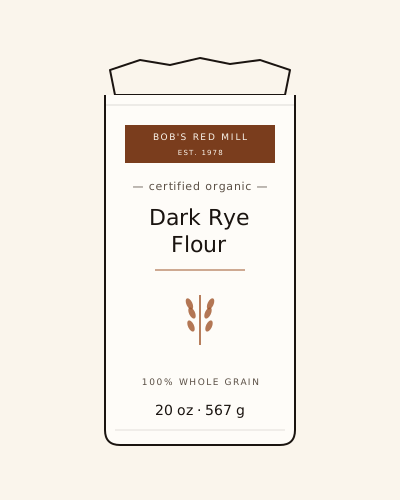
Bob's Red Mill Organic Dark Rye Flour
Stone-ground, whole grain, no additives. Widely stocked in American grocery stores and on Amazon. A 20 oz bag is enough to start and maintain a culture for over a month. Bob's Red Mill is one of the few mainstream brands that reliably stocks dark rye rather than the lighter "medium rye" that some other brands sell.
Check on Amazon →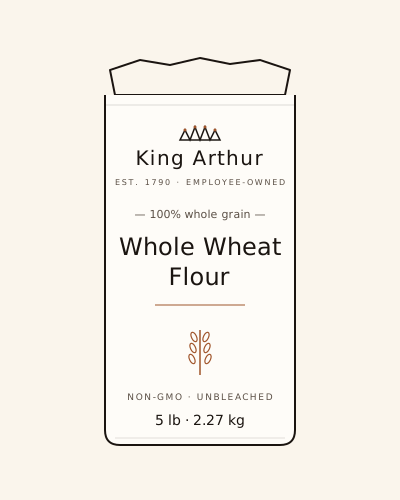
If rye is unavailable
King Arthur Premium Whole Wheat Flour
King Arthur's whole wheat is consistently fresh and unbleached. Their flour is also bromate-free across the entire product line, which matters for starter work. Their bags are smaller (5 lb is the standard) but the quality is high.
Check on Amazon →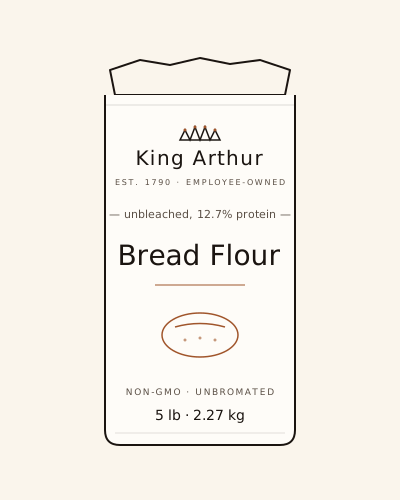
For maintenance once established
King Arthur Unbleached Bread Flour
If you are baking the bread anyway, using the same flour for the starter keeps things simple and reliable. King Arthur's bread flour runs around 12.7% protein, which is on the higher end and produces good gluten development in the final loaf. The starter has zero issues on it.
Check on Amazon →Generic store-brand all-purpose flour from major grocery chains works fine for starter maintenance once established. We are not snobs about this. The brand matters most in the first week when the microbes need every advantage they can get.
How to switch flours without killing your starter
You will almost certainly want to switch flours at some point. Maybe you started with rye and want to move to bread flour. Maybe you've been on all-purpose and want to try whole wheat for more flavor. The switch is straightforward but worth doing gradually.
The simple protocol:
- Feeding 1: 50% old flour, 50% new flour, normal water amount. Wait for the starter to peak.
- Feeding 2: 25% old, 75% new. Wait for the peak.
- Feeding 3: 100% new flour. Wait for the peak.
The starter may be 20-30% slower for the first 2-3 feedings on the new flour. This is normal. The microbial population is recalibrating to a slightly different food source. By the fourth or fifth feeding on the new flour, the starter should be back to its usual rhythm.
The exception is if you are switching away from refined flour to whole grain. In that direction the starter usually gets faster and more vigorous, not slower. You can often skip the gradual transition and just feed it straight whole grain.
Troubleshooting
My starter smells like acetone or nail polish remover. Is it ruined?
No. It is hungry, not spoiled. Pour off any dark liquid, discard all but 25g, and feed 1:5:5 (25g starter, 125g flour, 125g water) instead of 1:1:1. Full explanation of the chemistry and a feeding table by kitchen temperature: why your sourdough starter smells like acetone.
The starter has a layer of dark liquid on top
That is hooch: alcohol produced by hungry yeast. Same problem as above. Pour it off and feed the starter. The starter is still alive. If it has been sitting unfed for weeks, the recovery takes longer than one feed and follows a protocol matched to the length of the neglect.
The starter is not rising at all after 5+ days
Common causes, in order of likelihood: (1) the kitchen is too cold (under 70°F / 21°C slows things dramatically), (2) the flour is too refined, (3) the water is heavily chlorinated or chloraminated (standing it overnight removes chlorine but not chloramine), (4) the starter is being fed too often before it has time to build population. The fix for most beginners is to move the starter somewhere warmer (top of the fridge, near a heating vent) and switch to whole-grain flour.
The starter has pink, orange, or fuzzy mold
Throw it out and start over. This is rare with good flour and clean tools, but it happens. Pink or orange streaks usually indicate a bacterial contamination unrelated to sourdough cultures. Mold means the starter has been exposed too long or the jar is contaminated.
The general rule: kahm yeast (a thin white film on top, smells yeasty) is harmless and can be scraped off. Anything pink, orange, black, or visibly fuzzy means the whole jar goes in the trash.
Frequently asked questions
Can I use all-purpose flour for a sourdough starter?
Yes, but it will take longer to get going than rye. All-purpose works fine for maintaining an established starter. For the first 7-10 days of building a new starter from scratch, whole-grain rye or whole wheat is faster and more reliable because the bran carries more wild yeast and lactobacilli.
Do I need bread flour for a sourdough starter?
No. Bread flour has higher protein, which matters for bread dough structure but not for the starter itself. A starter is just a fermenting culture. Save bread flour for the actual loaf and feed your starter on something cheaper.
Can I switch flours once my starter is established?
Yes. Most mature starters adapt within 2-3 feedings. To switch, do a 50/50 blend feeding once or twice, then move fully to the new flour. The culture will be a little sluggish for the first few feedings and then return to normal.
My sourdough starter smells like acetone or nail polish remover. Is it ruined?
No. An acetone or nail-polish smell means the starter is hungry, not dead or contaminated. The compound is most likely ethyl acetate, formed when the ethanol and acetic acid a starved culture accumulates react together. Discard down to 25g and feed 1:5:5 (25g starter, 125g flour, 125g water) rather than 1:1:1, and feed more often if your kitchen is warm. The smell normally returns to yogurt or beer within two or three feeds.
Is organic flour better for sourdough?
For starter work specifically, organic flour is sometimes a small advantage because it has not been treated with bromate or other dough conditioners that can inhibit microbial activity. The "organic" label itself is not magic. What you want is "unbleached, unbromated." Most reputable brands (King Arthur, Bob's Red Mill, Anson Mills) are bromate-free across their entire line, organic or not.
Can I use leftover starter as a flour substitute?
Yes. Discard starter (the portion you would normally throw away during feeding) makes excellent pancakes, crackers, biscuits, and waffles. It is not really a "flour substitute" since it contains its own water, but it adds flavor and a small amount of leavening to baked goods. We will be covering specific discard recipes in future articles.